

IN POSITIONの検索結果
検索のヒント

検索のヒント

■キーワードの変更・再検索
記号を含むキーワードや略称は適切に検索できない場合があります。 略称は正式名称の一部など、異なるキーワードで再検索してみてください。
■ひらがな検索がおすすめ!
ひらがなで入力するとより検索結果に表示されやすくなります。
おすすめ例
まどうし
つまずきやすい例
魔導士
「魔導師」や「魔道士」など、異なる漢字で検索すると結果に表示されない場合があります。
■並び順の変更
人気順や新着順で並び替えると、お探しの作品がより前に表示される場合があります。
■絞り込み検索もおすすめ!
発売状況の「新刊(1ヶ月以内)」にチェックを入れて検索してみてください。
-
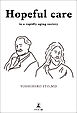
Hopeful care in a rapidly aging society
The ideology that will transcend even death. A doctor running an aged day care since the long-term care insurance system was first implemented in Japan explains life and death based on existential philosophy-like beliefs and the hope that can be found therein. This book will help you find your true self and live free from loneliness. With real life stories composed at the day care. 〈Contents (chapters)〉 Introduction About me Chapter 1 Flow of Thought Chapter 2 The Nice Day Journey Establishment of the long-term care insurance system Historical changes in the plight of those requiring care The beginning of Nice Day The first attendees Issues between staff From individual therapy to group therapy Signs of change at Nice Day with reverse thinking Analysis of the reverse thinking effect Therapeutic community The criteria for TC The TC approach A comparison between Nice Day and TC The TC-like community makes it Japan’s “mahoroba” Another look at Nice Day Memorial services and Heidegger’s philosophy Differences between TC and fundamental co-existence (community of salvation) Realization that life is finite Relationships at Nice Day The Nice Day scene Life stories Chapter 3 Life Stories at Nice Day Akio Akamatsu Tatsuko Shinoda Tomiko Hasegawa Yukihiro Hamada Chiharu Hayakawa Masayuki Higuchi Ms. S. H. Hajime Fujita Ms. T. M. Mr. Y. W. Chimao Motojima Life story effect survey results March 2021 Some remarks about the survey Conclusion Reverse thinking and nursing care with love Fundamental issues of scientific humanity Conditions for keeping older people at home Conditions for the emergence of a community of salvation Getting closer to the ideal community Step one: I recommend nursing care with love by reverse thinking Step two: “Demonstration” of the respect for the aged concept Afterword 〈Author’s bio〉 Yoshihiro Ito Dr. Ito was born in Kyoto City. In 1961, he entered the faculty of engineering at Kyoto University before transferring to the university’s medical faculty in 1963 and graduating in 1967. That same year he enrolled in a doctoral course in physiology at Kyoto University. In 1971, he withdrew from the course and was appointed director of radiology at a general hospital in Kyoto City, a position he retired from ten years later. In 1981, he opened Ito Clinic then an adjoining large-scale day care for 60 attendees in 2001. Find Dr. Ito on Facebook. He is also the author of “Jiritsu Kunrenho no Igaku” [The Medicine of Autogenic Training] (published by Chuko Shinsho). -
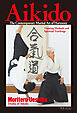
Aikido,the Contemporary Martial Art of Harmony;Training Methods and Spiritual Teachings (English translation of Aikido book)
※この商品はタブレットなど大きいディスプレイを備えた端末で読むことに適しています。また、文字だけを拡大することや、文字列のハイライト、検索、辞書の参照、引用などの機能が使用できません。 【内容】 English translation of “Aikido, keiko to kokoro: gendai ni ikiru chowa no budo" Aikido, the Contemporary Martial Art of Harmony: Training Methods and Spiritual Teachings is an introductory book on aikido,explains in easy-to-understand words the philosophy, techniques, and training methods of aikido which are designed to enable its trainees to transcend contests and conflicts and to develop themselves mentally and physically in perfect harmony with each other in training. ◆Preface ◆The History of Aikido ◆Training Methods and Spiritual Teachings of Aikido ◆The Tradition of Aikido ◆Brief Personal Records of Successive Doshus 【著者】 Moriteru Ueshiba (1951- ) Doshu of Aikido 1985 Took office as Managing Director. 1996 Took office as Chief Director of the Aikikai Federation. 1999 Succeeded to the position of Doshu owing to the second Doshu's death. 2006 Received an Anchieta Medal of Brazil. Became emeritus visiting professor at International Budo University. 2009 Was awarded the Order of Friendship from the Russian Federation. 2010 Took office as special invited professor at Kogakkan University (till 2017). 2012 Took office as Chief Director of the Aikikai Public Utility Foundation owing to the change of status of Aikikai from an incorporated foundation to public utility foundation. Received the Gold Medal from University of Valencia. 2013 Was conferred a Blue Ribbon Medal for his achievements of publicizing and promoting aikido. Filled many important posts including the Director of the Nippon Budokan Public Utility Foundation and Senator at International Budo University. -
 値引きあり
値引きあり -
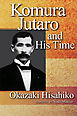
Komura Jutaro and His Time
After the Meiji Restoration, the Sino-Japanese War, and the Russo-Japanese War, Japan found itself occupying a prominent position in the global arena. Komura Jutaro, whom Mutsu Munemitsu had chosen as his successor, served on the Katsu Taro cabinet and set to forging a plan for Japan’s continental development in opposition to Russia, considering the influence of the United States and Britain. Komura accurately judged that Japan had no other option than war with Russia, given his piercing insights into Russia’s intentions, and that recognition enabled the Empire of Japan to stay on the right track. All the other merits and demerits of Komura’s diplomacy are directly connected to the merits and demerits of the steps taken by the Empire of Japan that eventually led to the country’s defeat in World War II. Komura’s diplomacy thus calls into question Japan’s national strategy itself: consistently pursuing independent diplomacy instead of entrusting Japan’s fate to collaboration with the Anglo-American world and, in Asia, expanding Japan’s exclusive sphere of influence beyond the Korean Peninsula deep into the Asian continent. -
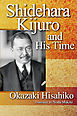
Shidehara Kijuro and His Time
The Constitution of Japan is often described as a pacifist constitution for its Article 9 renouncing war and foreswearing war potential. Although this is usually attributed to starry-eyed idealists and steely-eyed realists in the occupation, both of which wanted to ensure Japan did not again challenge America’s position, there is also a cast to be made for crediting Shidehara Kijuro (1872-1951). Indeed, the case becomes even stronger if we think of the Constitution not so much as pacifist but more as internationalist―as evidenced in the Preamble’s trusting in the justice and faith of the peace-loving peoples of the world and its belief that no nation is responsible to itself alone. For it was Shidehara who was the ultimate internationalist. Born to a middle-class family four years after the Meiji Restoration, he went to Tokyo Imperial University and from there to the civil service, ending up at the Ministry of Foreign Affairs. From there, history took him to a number of foreign capitals and historic international conferences on his way to the foreign ministership and after he became foreign minister. Serving as foreign minister under a succession of prime ministers, he developed and staunchly promoted what came to be called Shidehara diplomacy―a foreign policy stance of not intervening in China, respecting the Anglo-Japanese alliance, and adhering to what were put forward as universal values. Yet despite his steadfast championship, this internationalist stance was weakened by widespread discrimination against Japanese (e.g., in America’s immigration laws) and fatally wounded by the Kwangtung Army’s rogue aggression in China. He resigned as foreign minister in 1931, while retaining his seat in the House of Peers, and was tapped by the occupation to be Japan’s first postwar prime minister, putting him in a position to influence the Constitution’s drafting. Shidehara’s was a principled life engagingly recounted in this informative biography by one of Japan’s foremost diplomat-turned-historians. -
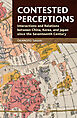
Contested Perceptions
The histories of China, Korea, and Japan have been intimately intertwined for centuries. But of these three countries, it was Korea that occupied the pivotal geopolitical position. The Korean Peninsula shaped the dynamics of international interactions and relations in East Asia which, up until the start of the twentieth century, were underpinned by systems of order wholly removed from the sovereign state system we recognize as ubiquitous today. Contested Perceptions examines the coexistence of “neighborly relations” between Japan and Korea and “tributary relations” between Korea and the Qing dynasty from the seventeenth to the nineteenth century, and Korean “tributary autonomy” in the late nineteenth century. It provides a cogent analysis of the differing perceptions that determined the success or failure of these past systems of order and their influence upon the balance of power in East Asia from the seventeenth century to modern times. Delving into the history of East Asian international relations, diplomacy, and power politics, this book elucidates the events that led to the Sino-Japanese and Russo-Japanese wars, and the conflicts of interest that have defined these nations up to the present day. -

Terrifying and Bizarre Stories from Old Edo ― From the Secret Records of Magistrate Yasumori Negishi: The ”Mimibukuro” Chronicles
This book, known as "Mimibukuro," is a collection of stories heard by Edo period magistrate Negishi Yasumori (1737-1815). The author, who was a magistrate at the time, served as the Sado magistrate from March 1784 to July 1787. This collection of nearly 1,000 stories, spanning 10 volumes, is a highly confidential collection of stories. The author, who held the important position of magistrate at the time, collected the facts, even though they were heard from the public, and recorded them as accurately as possible, along with proper names of places and people, without any forced interpretations. This book compiles carefully selected original texts, presents them in easy-to-understand modern Japanese, and includes commentary. Part 1 focuses on "useful stories" and "mysterious tales," while Part 2 features stories about "spirits" and "fox spirits." This book conveys the joy of the alternate culture of the Edo period, with each story enjoyed like a short story. The original is in Japanese. The English translation features a selection of over dozens of famous and rare ukiyo-e prints (public domain) centered around the mysterious themes of Japan's Edo period, which are featured as visuals at the beginning of the book. 本書は、江戸時代の奉行・根岸鎮衛(ねぎしやすもり:1737-1815)が「身近で聞いた話」を書き綴ったもので、『耳袋』として知られてきたもの。当時奉行であった著者が、佐渡奉行を務めていた天明4年3月から同7年7月の間に、当時の江戸時代に伝聞されていた「奇談」や「人のためになる話」の聞き書きは10巻、全部で1000に近い話が集録された門外不出の秘録。その記録の特徴は、当時、奉行という重い役職にあった著者が、聞き書きとはいえ「事実」を集め、地名や人物名の固有名詞とともに、できるだけ正確に、こじつけ的な解釈をすることなく、ただ淡々と記されているところ。その中から本書では、厳選した原文資料を編案して現代語文でわかりやすく表現し、解説を加えて構成。一部では「ためになる話」と「不思議な話」を中心にし、二部では「死霊」と「妖狐」にまつわる話を掲載。それぞれの話を、短編小説のような感覚で楽しめる大江戸の異聞文化の醍醐味を伝える書。元本は日本語。英訳版では、日本の江戸時代における怪奇なテーマを中心に、名作やレアな数十点以上の浮世絵(パブリックドメイン)を特選し、本書の巻頭に口絵としてビジュアルに掲載。 -
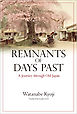
Remnants of Days Past: A Journey through Old Japan
Remnants of Days Past, by Kyoji Watanabe, is an epic journey into Japan’s past. It is a comprehensive look at the Tokugawa rule and the Edo period, an age in which the civilization of “Old Japan” was still on display and which, for better or worse, ceased to exist with the advent of modernization. Watanabe covers in great detail several topics pertaining to this civilization, including the status and position of the various social classes, views of women and children, attitudes towards sex, labor, and the body and religious beliefs, as well as the unique cosmology behind this civilization. Watanabe makes use of a number of works written by foreign observers who visited Japan from the end of the Edo period to the beginning of the Meiji to support his views. As the author writes in the book, “What is important in my mind is the reality that the civilization of ‘Old Japan’ developed through a universal desire, as well as the ideas behind this desire, to make it as comfortable as possible for human existence.” This is a massive work that takes an in-depth look at what modern Japan has lost.
表示されていない作品があります
セーフサーチが「中・強」になっているため、一部の作品が表示されていません。お探しの作品がない場合は、セーフサーチをOFFに変更してください。