

NODA Makitoの検索結果
検索のヒント

検索のヒント

■キーワードの変更・再検索
記号を含むキーワードや略称は適切に検索できない場合があります。 略称は正式名称の一部など、異なるキーワードで再検索してみてください。
■ひらがな検索がおすすめ!
ひらがなで入力するとより検索結果に表示されやすくなります。
おすすめ例
まどうし
つまずきやすい例
魔導士
「魔導師」や「魔道士」など、異なる漢字で検索すると結果に表示されない場合があります。
■並び順の変更
人気順や新着順で並び替えると、お探しの作品がより前に表示される場合があります。
■絞り込み検索もおすすめ!
発売状況の「新刊(1ヶ月以内)」にチェックを入れて検索してみてください。
-
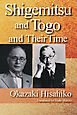
Shigemitsu and Togo and Their Time
The Kwangtung Army’s invasion of Manchuria in 1931 was a clear demonstration of the military’s independence and the Japanese foreign policy establishment’s impotence and irrelevance. For the next 14 years, diplomats and others who sought to avert war on the Asian mainland and with the Western powers saw their efforts sidelined and undercut. Such is not, however, to imply such toilers-in-the-dark did not exist. They did, and this ambitious history chronicles that difficult time focusing on the lives of Shigemitsu Mamoru and Togo Shigenori. A career diplomat who brokered a ceasefire between the Imperial Japanese Army and the Chinese Kuomintang Army in 1932 and then a settlement of the Russo-Japanese border at Changkufeng Hill in 1938, Shigemitsu was aghast at the 1940 tripartite Pact (among Japan, Germany, and Italy) and its implications for Japan’s relations with the UK and the US. Despite―or perhaps because of―his opposition to the militarists’ policies, he was appointed Foreign Minister midway through the Pacific War, and it was in that capacity that he was caught up in the charade of the International Military Tribunal for the Far East. Much of Shigemitsu’s work was complemented by Togo’s, including efforts to better relations with the Soviet Union. Marginalized though he was, Togo had the distinction of being Foreign Minister both at the outbreak and at the end of the Pacific War, albeit with a long hiatus in the middle, and it was this distinction that brought him to the International Tribunal’s attention. Belying the standard image of a hundred million hearts beating as one, Japan had many distinguished figures who remained true to their principles even as they served the state during the long war years. This is thus both a history of personal turmoil and an insightful window on the Japan of that era. -
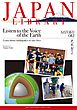
JAPAN LIBRARY
“I wrote this book in the hope that readers will be able to save their own lives as well as those of the ones they love when an earthquake next strikes, so that the tragedy of March 11, 2011, would never be repeated.” ―Satoko Oki What our chatty planet teaches us Would you be surprised to hear that there are scientists who listen to the Earth? Yes, the Earth does talk in many different voices?the voice of the air, the voice of the sea, the voice of volcanoes, and the voice of the Earth. Seismologists listen to the voice of the Earth. We use high performance seismometers that do not miss the slightest muttering by the Earth that human ears cannot hear. That way, we can learn about what causes earthquakes and even what it is like inside the planet. Earthquakes occur because it is hot inside the planet?because the Earth is dynamic. We cannot escape earthquakes as long as we live on the Earth. But from listening to the planet, seismologists have discovered what causes earthquakes and how we can live with them to protect our lives. -
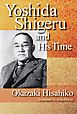
Yoshida Shigeru and His Time
Yoshida Shigeru is widely regarded as a pivotal figure in early postwar Japanese history―someone who guided the nation through those difficult years with a clear vision and a firm hand. Yet much of his success, this book argues, was mandated by circumstances, and he was more a practical politician than an ideologue wedded to any particular “ism”. Particularly lauded by Yoshida admirers are his adroit fending off of pressures to remilitarize, including during the Korean War years, and his accompanying focus on economic recovery as the nation struggled to get back on its feet. Yet the decision not to rearm had already been made in the postwar Constitution’s Article 9, and Yoshida was more affirming Occupation policy than breaking new ground. Indeed, his policy pronouncements in this area largely channeled MacArthur’s thinking throughout SCAP’s reign. Pushing that thought one step further, Ambassador Okazaki contends that the acceptance of Article 9 was part of a grand bargain with MacArthur: Japan would forsake rearmament and the International Military Tribunal for the Far East would not put the Emperor in the dock for war crimes. Taking issue with the conventional wisdom, Okazaki further maintains that many Occupation policies (e.g., women’s suffrage and agrarian reform) would have been adopted in the course of building upon prewar democratization initiatives even were there no Occupation. Significantly, these reforms, unlike zaibatsu dissolution and the purge, for example, were not rescinded once Japan regained its independence in 1952. Pulling together testimony from a wide variety of informed sources, this solidly argued treatise roundly rejects the Tokyo Trials, both their conduct and their verdicts, and paints a picture of Japan laboring under a capricious autocracy in the Occupation years. This is an insightful work that demands serious consideration by everyone interested in Japan past, present, and future.