

This First Stepの検索結果
検索のヒント

検索のヒント

■キーワードの変更・再検索
記号を含むキーワードや略称は適切に検索できない場合があります。 略称は正式名称の一部など、異なるキーワードで再検索してみてください。
■ひらがな検索がおすすめ!
ひらがなで入力するとより検索結果に表示されやすくなります。
おすすめ例
まどうし
つまずきやすい例
魔導士
「魔導師」や「魔道士」など、異なる漢字で検索すると結果に表示されない場合があります。
■並び順の変更
人気順や新着順で並び替えると、お探しの作品がより前に表示される場合があります。
■絞り込み検索もおすすめ!
発売状況の「新刊(1ヶ月以内)」にチェックを入れて検索してみてください。
-
 完結
東京チェックイン
▼そんでよし!▼東京チェックイン第1話/旅▼東京チェックイン第2話/宿▼東京チェックイン第3話/食▼東京チェックイン第4話/会社▼東京チェックイン第5話/職人▼東京チェックイン第6話/母▼東京チェックイン第7話/祈り▼This First Step▼おまけマンガ●あらすじ/世界中を旅してまわる、いわゆるバックパッカーの青年・渡。いろいろな人と出会い、さまざまな文化に触れ、未知の土地を体験していくことに魅了され、当初1年間の予定だった旅は4年目を迎えていた。そんな渡が旅に出た理由は、東京の雑踏のなか、ガイドブック片手にひとり佇む外国人旅行者の淋しそうな姿を見ても、何もできなかった自分を変えるためだった…(東京チェックイン第1話)。●本巻の特徴/第54回小学館漫画賞一般向け部門受賞作『岳 みんなの山』の作者による初の傑作短編集。2005年にビッグオリジナル本誌で短期連載されていた「東京チェックイン」の他、新人コミック大賞入選作「This First Step」、増刊号掲載作「そんでよし!」を収録。 -
 完結
Under My Skin
”How did you manage to hide this lewdness under that suit?” Kudo is a successful elite office worker, but he's always been regretting he didn't know real love. When he meets younger - but daring and intriguing - carpenter Sato, he finds himself unable to resist the pleasure of being possessed by a man, even though, as a supposedly straight man, he feels he should find it demeaning. But, Sato doesn't hide that he's serious about Kudo, and pushes him to go one step beyond the tentative, fake relationships he's tried to build with women until now…?! A grown-up first love story, vividly awaking the feelings you discover when you seriously fall for someone for the first time in your life. ※本書は、現在配信している「アンダーマイスキン【単行本版(電子限定描き下ろし付)】」の英語版になります。内容は同じですので、重複購入にご注意下さい。また、特典は収録されておりません。 -

Elevate Your Mind and Expand Your Business How to Lead a Wonderful Life
Have you forgotten the importance of believing in yourself and others? This book will remind you of that and show you that having imagination, creativity, and love make you strong. The author, Kazuo Inamori, was a world-renowned entrepreneur who founded Kyocera Corporation, which has brought ceramics to every continent, and KDDI, one of the largest telecommunications companies in Japan. He also lifted Japan Airlines out of bankruptcy to solid profitability as its chairman. Despite the impressive career, he has never let his successes get to his head and he has continued to work for the greater good. This book is a culmination of the answers to questions he encountered through suffering and difficulties throughout his life. This is Inamori's first book, which has sold over 25 million copies worldwide. In this book, Inamori shows us the importance of finding passion and joy in one's work, believing in oneself to overcome obstacles, and being both rational and creative at the same time. True wisdom is timeless. That's why Inamori's theories stand the test of time and remain popular among Japanese businesspeople. Whether you're a new employee, a leader of a team, or even a CEO…at each step of your life, this book will help you. -
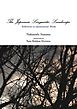
The Japanese Linguistic Landscape: Reflections on Quintessential Words
Languages change over time. No matter how hard we try to control and regulate them, they exist in a state of endless metamorphosis. This does not mean, though, that we should simply stand by and watch as language devolves into nonsense. What should we do, then? Recognizing the inevitability of change is a given, of course. But we must also navigate the delicate line between the pull of popular trends and the urge to cling blindly to the ways of the past. The ideal balance, Professor Nakanishi argues in this book, lies in being “one step behind the times,” which is the best approach for wielding all the charms of a language. Beautiful words have an ageless quality, regardless of when they first appeared in a language. The Japanese language testifies to that truth. This book introduces a balanced mix of new and old words that reflect the singular beauty of the Japanese language. The beautiful words of the Japanese language are not―as some people say―simply old, antiquated terms. Discerning beauty in a language requires more than having an antiquarian’s ear; it requires certain sensibilities and sensitivities. Only by submerging ourselves in a language can we perceive its splendid subtleties, and appreciate its true beauty. This book offers readers an opportunity to delve into to those nuances of Japanese, explore the language’s history, and savor its unique beauty. -
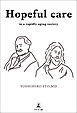
Hopeful care in a rapidly aging society
The ideology that will transcend even death. A doctor running an aged day care since the long-term care insurance system was first implemented in Japan explains life and death based on existential philosophy-like beliefs and the hope that can be found therein. This book will help you find your true self and live free from loneliness. With real life stories composed at the day care. 〈Contents (chapters)〉 Introduction About me Chapter 1 Flow of Thought Chapter 2 The Nice Day Journey Establishment of the long-term care insurance system Historical changes in the plight of those requiring care The beginning of Nice Day The first attendees Issues between staff From individual therapy to group therapy Signs of change at Nice Day with reverse thinking Analysis of the reverse thinking effect Therapeutic community The criteria for TC The TC approach A comparison between Nice Day and TC The TC-like community makes it Japan’s “mahoroba” Another look at Nice Day Memorial services and Heidegger’s philosophy Differences between TC and fundamental co-existence (community of salvation) Realization that life is finite Relationships at Nice Day The Nice Day scene Life stories Chapter 3 Life Stories at Nice Day Akio Akamatsu Tatsuko Shinoda Tomiko Hasegawa Yukihiro Hamada Chiharu Hayakawa Masayuki Higuchi Ms. S. H. Hajime Fujita Ms. T. M. Mr. Y. W. Chimao Motojima Life story effect survey results March 2021 Some remarks about the survey Conclusion Reverse thinking and nursing care with love Fundamental issues of scientific humanity Conditions for keeping older people at home Conditions for the emergence of a community of salvation Getting closer to the ideal community Step one: I recommend nursing care with love by reverse thinking Step two: “Demonstration” of the respect for the aged concept Afterword 〈Author’s bio〉 Yoshihiro Ito Dr. Ito was born in Kyoto City. In 1961, he entered the faculty of engineering at Kyoto University before transferring to the university’s medical faculty in 1963 and graduating in 1967. That same year he enrolled in a doctoral course in physiology at Kyoto University. In 1971, he withdrew from the course and was appointed director of radiology at a general hospital in Kyoto City, a position he retired from ten years later. In 1981, he opened Ito Clinic then an adjoining large-scale day care for 60 attendees in 2001. Find Dr. Ito on Facebook. He is also the author of “Jiritsu Kunrenho no Igaku” [The Medicine of Autogenic Training] (published by Chuko Shinsho).