

Akio Okazakiの検索結果
検索のヒント

検索のヒント

■キーワードの変更・再検索
記号を含むキーワードや略称は適切に検索できない場合があります。 略称は正式名称の一部など、異なるキーワードで再検索してみてください。
■ひらがな検索がおすすめ!
ひらがなで入力するとより検索結果に表示されやすくなります。
おすすめ例
まどうし
つまずきやすい例
魔導士
「魔導師」や「魔道士」など、異なる漢字で検索すると結果に表示されない場合があります。
■並び順の変更
人気順や新着順で並び替えると、お探しの作品がより前に表示される場合があります。
■絞り込み検索もおすすめ!
発売状況の「新刊(1ヶ月以内)」にチェックを入れて検索してみてください。
-
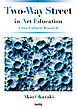
Two-Way Street in Art Education: Cross-Cultural Research
Diverse influences from abroad provide a prime field of cross-cultural research in art education. This book portrays the process of cross-cultural interpretation as a way of making sense of one’s world in relation to those of others. Cross-cultural research in art education is regarded as “a two-way street.” Chapters 1-4 provide information about art teacher training systems of Japan in 1990s, consider the introduction of European modernism into Japanese school art practice in 1920s, trace the influence of American art education literature on the historical development of Japanese art education in more than a century, and describe the story of incorporating contemporary U. S. art in Japanese school art practice in 1990s. Chapters 5-12 discuss obvious examples what Japanese art educators have learned from Europeans and Americans and provide detailed instances of what American art educators have learned from the Japanese. The cases of Akira Shirahama (1866-1927), Kanae Yamamoto (1882-1946), Seishi Shimoda (1890-1973), Arthur Dow (1857-1922), and Kenneth Beittel (1922-2003) are interesting because they illustrate the gap between what was learned from others and what was realized in modernist art education. A pilgrimage to others makes the living journeying itself that which is invaluable. Surely, “a two-way street” was needed between the American and Japanese art education to enrich each of us achieve cross-cultural understanding in art education. Without diverse influences, no country has its inherent cultural values as pearls in an oyster. Thus the two-way street between cultures in art and art education will be wide open.