

DEMONSTRATIONの検索結果
検索のヒント

検索のヒント

■キーワードの変更・再検索
記号を含むキーワードや略称は適切に検索できない場合があります。 略称は正式名称の一部など、異なるキーワードで再検索してみてください。
■ひらがな検索がおすすめ!
ひらがなで入力するとより検索結果に表示されやすくなります。
おすすめ例
まどうし
つまずきやすい例
魔導士
「魔導師」や「魔道士」など、異なる漢字で検索すると結果に表示されない場合があります。
■並び順の変更
人気順や新着順で並び替えると、お探しの作品がより前に表示される場合があります。
■絞り込み検索もおすすめ!
発売状況の「新刊(1ヶ月以内)」にチェックを入れて検索してみてください。
-
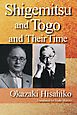
Shigemitsu and Togo and Their Time
The Kwangtung Army’s invasion of Manchuria in 1931 was a clear demonstration of the military’s independence and the Japanese foreign policy establishment’s impotence and irrelevance. For the next 14 years, diplomats and others who sought to avert war on the Asian mainland and with the Western powers saw their efforts sidelined and undercut. Such is not, however, to imply such toilers-in-the-dark did not exist. They did, and this ambitious history chronicles that difficult time focusing on the lives of Shigemitsu Mamoru and Togo Shigenori. A career diplomat who brokered a ceasefire between the Imperial Japanese Army and the Chinese Kuomintang Army in 1932 and then a settlement of the Russo-Japanese border at Changkufeng Hill in 1938, Shigemitsu was aghast at the 1940 tripartite Pact (among Japan, Germany, and Italy) and its implications for Japan’s relations with the UK and the US. Despite―or perhaps because of―his opposition to the militarists’ policies, he was appointed Foreign Minister midway through the Pacific War, and it was in that capacity that he was caught up in the charade of the International Military Tribunal for the Far East. Much of Shigemitsu’s work was complemented by Togo’s, including efforts to better relations with the Soviet Union. Marginalized though he was, Togo had the distinction of being Foreign Minister both at the outbreak and at the end of the Pacific War, albeit with a long hiatus in the middle, and it was this distinction that brought him to the International Tribunal’s attention. Belying the standard image of a hundred million hearts beating as one, Japan had many distinguished figures who remained true to their principles even as they served the state during the long war years. This is thus both a history of personal turmoil and an insightful window on the Japan of that era. -
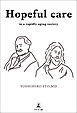
Hopeful care in a rapidly aging society
The ideology that will transcend even death. A doctor running an aged day care since the long-term care insurance system was first implemented in Japan explains life and death based on existential philosophy-like beliefs and the hope that can be found therein. This book will help you find your true self and live free from loneliness. With real life stories composed at the day care. 〈Contents (chapters)〉 Introduction About me Chapter 1 Flow of Thought Chapter 2 The Nice Day Journey Establishment of the long-term care insurance system Historical changes in the plight of those requiring care The beginning of Nice Day The first attendees Issues between staff From individual therapy to group therapy Signs of change at Nice Day with reverse thinking Analysis of the reverse thinking effect Therapeutic community The criteria for TC The TC approach A comparison between Nice Day and TC The TC-like community makes it Japan’s “mahoroba” Another look at Nice Day Memorial services and Heidegger’s philosophy Differences between TC and fundamental co-existence (community of salvation) Realization that life is finite Relationships at Nice Day The Nice Day scene Life stories Chapter 3 Life Stories at Nice Day Akio Akamatsu Tatsuko Shinoda Tomiko Hasegawa Yukihiro Hamada Chiharu Hayakawa Masayuki Higuchi Ms. S. H. Hajime Fujita Ms. T. M. Mr. Y. W. Chimao Motojima Life story effect survey results March 2021 Some remarks about the survey Conclusion Reverse thinking and nursing care with love Fundamental issues of scientific humanity Conditions for keeping older people at home Conditions for the emergence of a community of salvation Getting closer to the ideal community Step one: I recommend nursing care with love by reverse thinking Step two: “Demonstration” of the respect for the aged concept Afterword 〈Author’s bio〉 Yoshihiro Ito Dr. Ito was born in Kyoto City. In 1961, he entered the faculty of engineering at Kyoto University before transferring to the university’s medical faculty in 1963 and graduating in 1967. That same year he enrolled in a doctoral course in physiology at Kyoto University. In 1971, he withdrew from the course and was appointed director of radiology at a general hospital in Kyoto City, a position he retired from ten years later. In 1981, he opened Ito Clinic then an adjoining large-scale day care for 60 attendees in 2001. Find Dr. Ito on Facebook. He is also the author of “Jiritsu Kunrenho no Igaku” [The Medicine of Autogenic Training] (published by Chuko Shinsho).