

政治 - Japan Publishing Industry Foundation for Cultureの検索結果
検索のヒント

検索のヒント

■キーワードの変更・再検索
記号を含むキーワードや略称は適切に検索できない場合があります。 略称は正式名称の一部など、異なるキーワードで再検索してみてください。
■ひらがな検索がおすすめ!
ひらがなで入力するとより検索結果に表示されやすくなります。
おすすめ例
まどうし
つまずきやすい例
魔導士
「魔導師」や「魔道士」など、異なる漢字で検索すると結果に表示されない場合があります。
■並び順の変更
人気順や新着順で並び替えると、お探しの作品がより前に表示される場合があります。
■絞り込み検索もおすすめ!
発売状況の「新刊(1ヶ月以内)」にチェックを入れて検索してみてください。
-
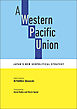
A Western Pacific Union
The Cold War ended more than thirty years ago, but the world-and within it, the countries of Asia and the Pacific-still struggles to establish a peaceful and prosperous community of nations. Many midsized and smaller states, caught in the webs of superpower rivalry, have not felt their interests adequately represented by existing alliances and international organizations. This volume envisions an alternative: a Western Pacific Union (WPU), conceived as a loosely integrated community of nations stretching from the Indian Ocean to the Pacific, that would counterbalance superpower dominance and give greater agency in global affairs to its members by coordinating their voices and interests. The initiative for this proposal comes from Japan, with Dr. KITAOKA Shinichi, former ambassador to the United Nations and former president of the Japan International Cooperation Agency, leading a team of established scholars, younger researchers, and specialists in articulating the concept of the WPU and dissecting the challenges facing its realization. The core of the book is a country-by-country treatment of the recent history and international relations of each potential member state and the prospects for its successful involvement in this nascent community of nations. Our world is increasingly integrated through advanced technologies and global commerce, but in many ways still remains fractious and divided. Finding peaceful, equitable, sustainable solutions to the issues confronting humanity demands new ideas and strategies. This volume addresses these needs with a new geopolitical vision for Asia and the Pacific. -
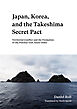
Japan, Korea, and the Takeshima Secret Pact
“A solution without a solution.” In 1965, a secret pact concluded between the leaders of Japan and South Korea quietly shelved the territorial dispute over the island of Takeshima (Dokdo), setting the course for normalization of diplomatic relations between the two countries. Several well-known figures were active in the complex and convoluted political maneuvering and backroom negotiations that helped bring the pact to fruition. For the first time ever, this book-including personal accounts from those who were directly involved-reveals the painstaking work behind the scenes to mend the fraught relationship between Japan and South Korea by conceiving the most subtle of solutions. And yet the pact and all that it achieved would mysteriously be erased from history. How and why did this happen? Winner of the Asia Pacific Award, Japan, Korea, and the Takeshima Secret Pact is a fascinating look into the intricate process of mending diplomatic relations and the small island that was the center of it all. -
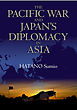
The Pacific War and Japan's Diplomacy in Asia
Focusing on the significance of the Greater East Asia policies promoted by Prime Minister SHIGEMITSU Mamoru during World War II-including the issues of approving independence for Burma and the Philippines as well as the liberation of French Indochina-Prof. HATANO Sumio sheds light on the formation and evolution of Japan's diplomacy in Asia. He then goes on to verify the meaning of what was held to be Japan's war aim-liberation of the people of Asia-and its impact on policies. -
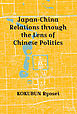
Japan-China Relations through the Lens of Chinese Politics
Over the last half century, why has the relationship between Japan and China been so volatile that it keeps fluctuating between deteriorating and improving? Why does criticism of Japan over historical issues repeatedly converge and reemerge? The reason lies in the constant power struggles taking place inside the Chinese Communist Party itself. An examination of various cases and documents dating from the period of normalization of diplomatic relations between Japan and China from the1970s to the present day will clarify how the Chinese political system is closely related to its diplomatic policies towards Japan. -
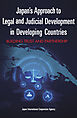
Japan's Approach to Legal and Judicial Development in Developing Countries: Building Trust and Partnership
Beginning with the drafting of Vietnam’s civil law in 1996, the Japan International Cooperation Agency (JICA) has supported the “making of laws” in developing countries including Cambodia, Laos, and Myanmar. This is a field of cooperation unique to Japan, originating from its experience studying foreign legal systems during the Meiji Restoration. Today, Official Development Assistance (ODA) is considered one of the pillars of Japan’s rule of law promotion. JICA has collected documents relating to its 20 years of work, along with interviews with those involved in rule of law promotion from Japan, Vietnam, Cambodia, Laos, and more. Clashes over wariness towards foreigners and differences in understanding of legal terminology… This is a record of the obstacles overcome by the people of developing nations who wanted to draft their own national laws, and the Japanese lawyers who supported them, as well as their sincere efforts, struggles, and challenges. This is a recommended book for those interested in international cooperation, as well as those who want to know more about the rule of law promotion process. -
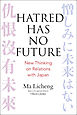
Hatred Has No Future: New Thinking on Relations with Japan
The year was 2002- the 30th anniversary of the normalization of Sino-Japanese relations but also a time when relations grew sharply frostier over the prime minister's visit to Yasukuni Shrine. Into this fray dropped Ma Licheng's “New Thinking on Relations with Japan", triggering a storm of debate in both China and Japan. Even now, more than a decade after the essay's publication, the New Thinking continues to have a major influence on policy discussions. While Sino-Japanese relations hit new turbulence over the Diaoyu/Senkaku Islands in 2012,the author remains optimistic that the bilateral issues can be resolved rationally and peacefully. Referencing the durability of the postwar peace between France an Germany, he argues that - for their own and the international community's sake, China and Japan can and must find ways to overcome their antagonisms and live in peace as complementary neighbors.