無料マンガ・ラノベなど、豊富なラインナップで203万冊以上配信中!
無料マンガ・ラノベなど、豊富なラインナップで203万冊以上配信中!
※この商品はタブレットなど大きいディスプレイを備えた端末で読むことに適しています。また、文字だけを拡大することや、文字列のハイライト、検索、辞書の参照、引用などの機能が使用できません。
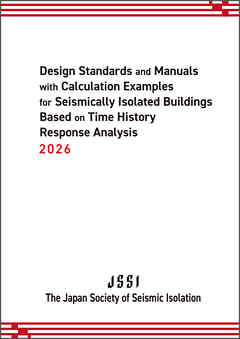
Advances in seismically-isolation structural technology have expanded the scope of application, allowing the technology to be used in super-high-rise buildings exceeding 60 meters in height and for the seismic retrofitting of existing structures. Previously, the seismic safety of seismically-isolated buildings had to be verified entirely through time-history response analysis to obtain ministerial certification. Design based on time-history response analysis remains widely adopted today. The Japan Society of Seismic Isolation produced a design manual in 1999 and subsequently published the "JSSI Design Standards and Manual for Seismically-Isolated Buildings Using Time-History Response Analysis" in 2005. Since then, the document has undergone repeated revisions to incorporate new findings regarding long-period ground motion, the durability of seismic-isolation devices, wind loads, and seismic-isolation foundations. Furthermore, in response to the need for countermeasures against long-period ground motion associated with a potential Nankai Trough megathrust earthquake—and the consequent requirement to account for the effects of prolonged and repeated cyclic loading on seismic-isolation devices as well as design input ground motions—a first revised edition incorporating the latest research findings was produced.
※アプリの閲覧環境は最新バージョンのものです。

※アプリの閲覧環境は最新バージョンのものです。
新刊やセール情報をお知らせします。
Design Standards and Manualswith Calculation Examplesfor Seismically Isolated BuildingsBased on Time HistoryResponse Analysis2026